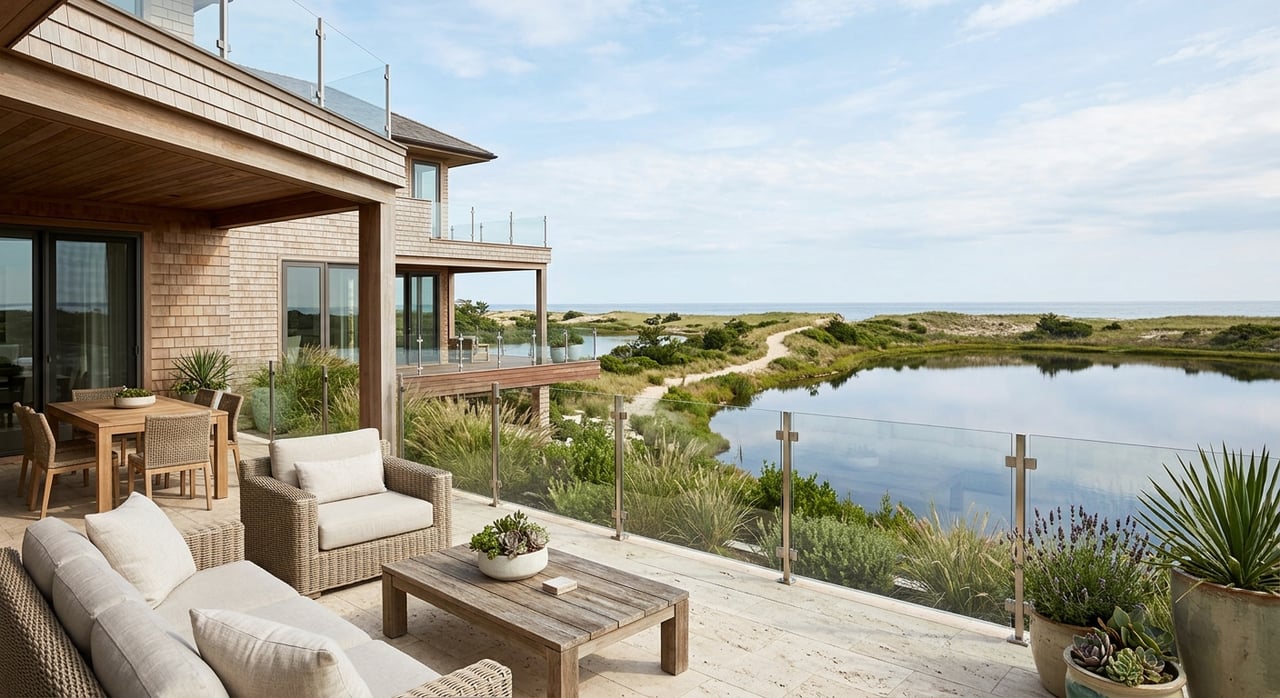
Few waterfront settings feel as distinctive as a home on one of South Walton’s coastal dune lakes. If you are considering buying along these lakes, you are likely drawn to the mix of quiet water views, beach proximity, and the sense that this landscape is truly different from anywhere else on the Gulf Coast. The good news is that it is different, but ownership also comes with important rules, planning considerations, and long-term responsibilities. Let’s dive in.
Why South Walton’s dune lakes stand out
South Walton’s coastal dune lakes are rare on a global scale, which is a big part of their appeal. According to Walton County’s coastal dune lakes overview, the county is home to 15 named coastal dune lakes spread along 26 miles of coastline.
These lakes are not typical freshwater lakes. Walton County explains that they are fed by rain, groundwater seepage, streams, and storm surge, and they have an intermittent connection to the Gulf through an outfall. Because of that shifting connection, water conditions can vary, and salinity may range from nearly fresh to significantly saline.
That natural complexity is one reason the lakes are treated as sensitive resources. Walton County notes that it works with the Choctawhatchee Basin Alliance to monitor water quality and maintains a Coastal Dune Lakes Advisory Board focused on protection and environmental integrity.
Well-known lakes in South Walton
If you have spent time along 30A, some of these lake names may already be familiar. Walton County’s public access guide highlights recognized lakes such as Western Lake, Eastern Lake, Deer Lake, Camp Creek, and Lake Powell.
Several of the best-known access points are tied to public lands and parks. Florida DEP’s Walton County coastal access guide notes that Grayton Beach State Park, Deer Lake State Park, and Topsail Hill Preserve State Park help preserve parts of the dune lake system, while Walton County’s public access sheet also references Camp Helen State Park.
For you as a buyer, that means the setting often feels scenic and preserved. It also means these are not private water features in the usual sense. They are part of a larger protected landscape with public access, environmental oversight, and lasting community value.
What lakefront ownership really means
Owning on a coastal dune lake can be incredibly rewarding, but it is not the same as owning on a standard inland lake. The biggest difference is that county rules are designed to protect the lake system first, which affects how you use and improve the property.
Under Walton County land development code provisions for coastal dune lakes, the Coastal Dune Lake Protection Zone extends 300 feet landward from the mean or ordinary high-water line of a lake and its tributaries. If a property falls within that zone, site work and future improvements may be subject to added review.
That protection framework shapes nearly every decision near the shoreline. It can affect drainage, clearing, hardscape, septic planning, and the overall footprint of future projects.
Protection zone rules to know
If you are buying a dune lakefront lot or home, some of the most important rules include:
- A stormwater plan may be required within the protection zone.
- Low-impact development practices are required as part of permitting.
- At least 60% of the parcel portion within the 300-foot zone must remain pervious.
- Native vegetation clearing is limited.
- Disturbance in the natural outlet area is prohibited.
These rules matter whether you are building new, renovating, or simply trying to understand what is possible over time. A property with stunning views may still have meaningful limits on what can be added or altered.
Tree removal and land clearing
One of the most common surprises for buyers is how tightly vegetation work can be regulated. Walton County’s FAQ guidance specifically advises owners to call before doing any land alteration, including removing trees or vegetation near a coastal dune lake.
The county code also requires a land-clearing permit anywhere a parcel lies within the protection zone. If your vision for a property includes opening up the view, reshaping the yard, or changing landscaping near the water, those plans should be reviewed early.
Shoreline changes are limited
Many waterfront buyers naturally ask about seawalls, bulkheads, rip-rap, docks, and boardwalks. On South Walton’s dune lakes, the answer is usually more restricted than people expect.
According to the county code, seawalls, bulkheads, revetments, and rip-rap are not permitted in the Coastal Dune Lake Protection Zone. The code also prohibits new point or non-point sources of pollution, including untreated stormwater runoff and treated wastewater effluent.
There is also a general rule against construction or disturbance within 100 feet of the ordinary or mean high-water line, with only limited exceptions for certain older lots of record. Boardwalks, docks, and shoreline access structures may be allowed, but they still have to meet county buffer, vegetation, erosion, and state permitting requirements.
Lifestyle: beauty, access, and activity
A dune lakefront home can offer a remarkable day-to-day experience. You may enjoy still-water views in the morning, nearby Gulf access, and a sense of preserved natural scenery that is hard to replicate elsewhere in Florida.
At the same time, privacy on these lakes is not absolute. Walton County’s public access map shows public access points at places like Grayton Beach State Park, Deer Lake State Park, Camp Helen State Park, and the county park boat ramp on Lakewood Drive at Eastern Lake.
The same guide notes that the Timpoochee Trail runs along County Road 30A and offers views of nearly all the lakes from Stallworth to Camp Creek. In practical terms, some homes will feel more tucked away, while others may sit near trails, ramps, beach access points, or park activity.
Privacy depends on the setting
If privacy is a top priority, the exact location of the lot matters. A home that borders state park or conservation land may feel more buffered than one near a public launch, trail segment, or heavily visited access area.
That said, many buyers see this as part of the value. The same protections and public stewardship that can limit alterations also help preserve the scenery that makes these homes so special.
Flood zones and building requirements
Before you buy, flood-zone review should be part of your due diligence. Walton County’s building requirements state that developments in special flood hazard areas need a development order and building permit, and elevation standards vary by flood-zone type.
Walton County’s FEMA flood-zone resource explains that AE and A1-A30 zones are subject to the 100-year flood, while VE and V1-V30 zones also include wave-action velocity risk. The county also notes that FEMA, not Walton County, assigns the flood-zone category.
For you, this means that the same stunning waterfront location that drives demand can also affect design standards, insurance needs, and renovation costs. It is important to understand the property’s current flood designation and whether key documents, such as an elevation certificate, are already available.
Flood insurance and coverage questions
Insurance is another area where dune lakefront buyers need clarity early in the process. Walton County’s disaster FAQs explain that standard homeowners insurance typically covers wind, hail, fire, and lightning, but not flooding or storm surge.
The county’s flood insurance guidance adds that flood insurance should be considered even outside high-risk zones, and that coverage is generally required in a Special Flood Hazard Area when there is a government-backed mortgage. FEMA and FloodSmart information referenced by the county also note that flood policies typically have a 30-day waiting period.
In Florida, private flood insurance may also be available. The Florida Office of Insurance Regulation says private flood coverage can be written as a standalone policy or as an endorsement to a homeowners policy.
Sewer, septic, and drainage planning
Infrastructure matters more here than many buyers realize. Under Walton County’s code, if sewer service is available, new development or redevelopment that upgrades an onsite sewage system must connect to central sewer.
If sewer is not available, septic drain fields must be set back at least 100 feet from the water line. Combined with stormwater rules and protection-zone limits, that can affect what is feasible on a lot, especially if you are evaluating redevelopment potential.
Why these homes remain so desirable
Even with the added rules, demand for coastal dune lakefront homes remains understandable. The appeal comes from a rare combination of limited supply, protected surroundings, and the ability to enjoy both lake and beach environments within the same setting.
That value should be viewed thoughtfully, not as a simple luxury story. These properties are best understood as a balance of rarity and responsibility. The beauty is real, and so is the need for careful planning.
Smart questions to ask before you buy
If you are serious about owning on a coastal dune lake in South Walton, keep these questions front and center:
- Is the property inside the 300-foot Coastal Dune Lake Protection Zone?
- What FEMA flood zone applies to the home or lot?
- Is an elevation certificate available?
- Is central sewer available, or would septic rules control future plans?
- Do your goals include tree removal, shoreline access improvements, a dock, or a boardwalk?
- Has the property’s existing site work already been reviewed or permitted under current county standards?
The more clearly you answer those questions before closing, the more confident you can feel about whether the property truly fits your plans and lifestyle.
The bottom line on dune lakefront ownership
Owning a coastal dune lakefront home in South Walton can be a remarkable lifestyle investment. You get access to one of the region’s most distinctive natural settings, along with a sense of place that feels preserved, scenic, and genuinely rare.
You also step into a framework of environmental protections, flood considerations, and property-use rules that deserve close attention. If you want expert guidance on comparing lakefront opportunities across South Walton and 30A, MaryGrace Stubbs offers a polished, highly personalized approach to navigating unique coastal properties with care and clarity.
FAQs
What makes South Walton coastal dune lakes different from other lakes?
- Walton County says these lakes are globally rare, have an intermittent connection with the Gulf, and can range from nearly fresh to significantly saline depending on conditions.
What is the Coastal Dune Lake Protection Zone in Walton County?
- Walton County’s code says the protection zone extends 300 feet landward from the mean or ordinary high-water line of a coastal dune lake and its tributaries, with added rules for stormwater, clearing, and development.
Can you build a seawall on a coastal dune lake in South Walton?
- No. Walton County’s code says seawalls, bulkheads, revetments, and rip-rap are not permitted in the Coastal Dune Lake Protection Zone.
Do South Walton dune lakefront homes need flood insurance?
- Flood insurance may be required if the property is in a Special Flood Hazard Area and has a government-backed mortgage, and Walton County says it should be considered even outside high-risk zones.
Can you remove trees near a coastal dune lake in Walton County?
- You should not assume you can. Walton County advises owners to call before removing trees or vegetation near a coastal dune lake, and permits may be required within the protection zone.
Are South Walton coastal dune lakes private?
- Not typically. Walton County’s public access information shows multiple lakes with park, boat ramp, or beach access, and many are also visible from the Timpoochee Trail along 30A.